

What is the impact of the surrounding environment on the performance of a round electromagnet?
Leave a message

Hey there! As a supplier of round electromagnets, I've seen firsthand how the surrounding environment can have a big impact on their performance. In this blog, I'll share some insights on this topic and how it affects our products.
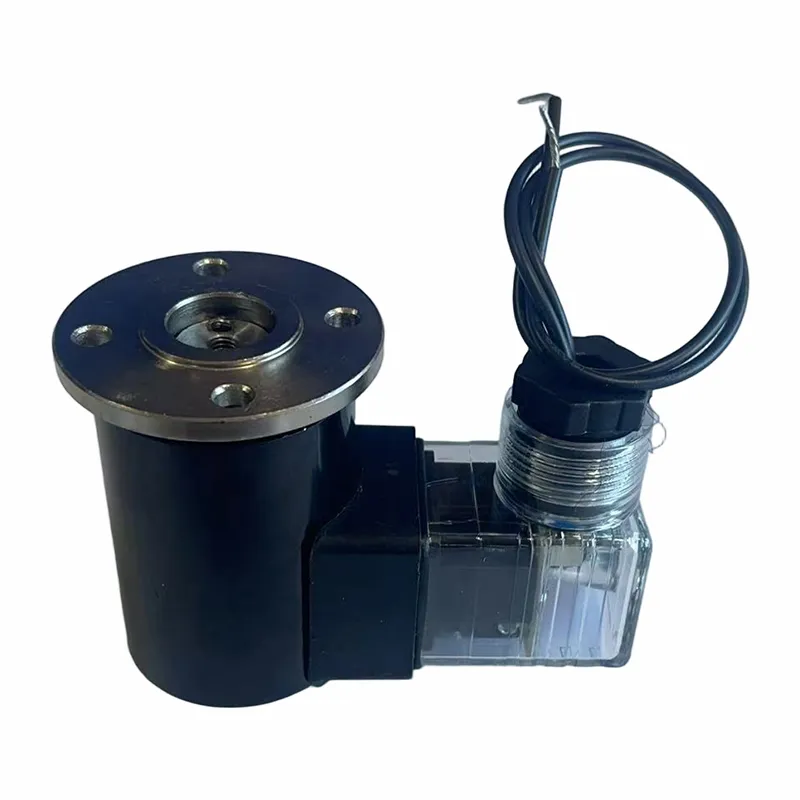

Let's start with temperature. Temperature is one of the most critical environmental factors that can influence the performance of a round electromagnet. When the temperature rises, the resistance of the wire in the electromagnet increases. According to Ohm's Law (V = IR), if the voltage remains constant and the resistance goes up, the current flowing through the electromagnet will decrease. Since the magnetic field strength of an electromagnet is directly proportional to the current (B = μ₀nI, where B is the magnetic field strength, μ₀ is the permeability of free space, n is the number of turns per unit length, and I is the current), a decrease in current means a weaker magnetic field.
For example, in a high - temperature industrial environment, say a steel manufacturing plant where temperatures can reach several hundred degrees Celsius, our round electromagnets may not perform as well as they do at room temperature. The reduced magnetic field strength can affect their ability to lift heavy objects or hold them securely. On the other hand, extremely low temperatures can also cause problems. Cold temperatures can make the wire more brittle, increasing the risk of breakage, which can lead to a complete failure of the electromagnet.
Humidity is another important factor. High humidity levels can cause corrosion of the electromagnet's components. The metal parts, especially the wire and the core, are vulnerable to rusting when exposed to moisture for an extended period. Rust not only weakens the physical structure of the electromagnet but also increases the electrical resistance. As we know from the earlier discussion about temperature, an increase in resistance leads to a decrease in current and, consequently, a weaker magnetic field.
In a coastal area where the air is humid and salty, our round electromagnets need to be properly protected. We often recommend using coatings or enclosures to prevent moisture and salt from coming into contact with the electromagnet. Otherwise, the performance will gradually degrade over time, and the lifespan of the product will be significantly shortened.
The presence of dust and debris in the environment can also impact the performance of a round electromagnet. Dust can accumulate on the surface of the electromagnet, which can act as an insulator. This insulation can prevent proper heat dissipation, causing the temperature of the electromagnet to rise. As we've already seen, a rise in temperature can lead to a decrease in magnetic field strength.
In a construction site or a mining area, where there is a lot of dust and dirt in the air, our round electromagnets need to be regularly cleaned. Failure to do so can result in overheating and reduced performance. Moreover, large debris can get stuck in the moving parts of the electromagnet (if it has any), preventing it from functioning correctly.
The electromagnetic environment around the round electromagnet is also crucial. If there are other strong magnetic fields nearby, they can interfere with the magnetic field of our electromagnet. This interference can cause the magnetic field of the round electromagnet to become distorted, affecting its ability to attract or hold objects in the desired way.
For instance, in a power plant where there are large transformers and other high - power electrical equipment generating strong magnetic fields, our round electromagnets need to be carefully installed and shielded. Otherwise, the performance can be severely compromised.
Now, let's talk about how these environmental factors relate to our different types of round electromagnets. We offer a variety of products, such as the Electromagnet for Steam Valve. In a steam valve application, the electromagnet is often exposed to high temperatures and steam, which means high humidity. These conditions require the electromagnet to be made of materials that can withstand heat and corrosion. Our engineers have designed these electromagnets with special coatings and high - temperature - resistant wires to ensure reliable performance in such harsh environments.
Our DC Electromagnet is another popular product. DC electromagnets are used in many different applications, from small electronic devices to large industrial machinery. In an industrial setting, they may be exposed to dust, high temperatures, and electromagnetic interference. We've taken these factors into account during the design process, using robust materials and proper shielding techniques to ensure that the DC electromagnets can perform well in various environments.
The Electromagnet for Massager is designed for a more consumer - oriented application. Although the environmental conditions are generally less harsh compared to industrial settings, factors like humidity and temperature can still affect its performance. For example, if the massager is used in a bathroom where the humidity is high, the electromagnet needs to be protected to prevent corrosion.
As a supplier, we understand the importance of providing products that can perform well in different environments. We conduct extensive testing on our round electromagnets under various simulated environmental conditions to ensure their reliability. We also offer customization services to meet the specific requirements of our customers. If you're facing unique environmental challenges in your application, we can work with you to develop a tailored solution.
If you're in the market for round electromagnets and want to learn more about how our products can perform in your specific environment, don't hesitate to reach out. We're always happy to have a chat about your needs and provide you with the best possible solution. Whether it's for a small - scale project or a large - scale industrial application, we've got the expertise and the products to meet your requirements.
In conclusion, the surrounding environment has a significant impact on the performance of a round electromagnet. Temperature, humidity, dust, debris, and electromagnetic interference are all factors that need to be considered. At our company, we're committed to providing high - quality round electromagnets that can withstand these environmental challenges. So, if you're interested in our products, let's start a conversation about how we can work together to get the best results for your application.
References
- Halliday, D., Resnick, R., & Walker, J. (2014). Fundamentals of Physics. Wiley.
- Grover, F. W. (1946). Inductance Calculations: Working Formulas and Tables. Dover Publications.


