

What is the effect of vacuum on the performance of a Push Pull Electromagnet?
Leave a message

As a supplier of Push Pull Electromagnets, I've witnessed firsthand the various factors that can influence their performance. One such factor that often doesn't receive the attention it deserves is the effect of vacuum on these devices. In this blog, I'll delve into how vacuum conditions can impact the performance of Push Pull Electromagnets and what implications this has for users and industries.
Understanding Push Pull Electromagnets
Before we discuss the impact of vacuum, let's briefly understand what Push Pull Electromagnets are. These are electromechanical devices that generate a magnetic field when an electric current is passed through a coil. The magnetic field then causes a plunger or armature to move, either in a pushing or pulling motion. They are widely used in a variety of applications, from industrial machinery to consumer electronics, due to their simplicity, reliability, and ability to provide linear motion.
The Role of Air in Normal Conditions
In normal atmospheric conditions, air plays a crucial role in the operation of Push Pull Electromagnets. Air provides a medium for heat dissipation. When an electric current passes through the coil of the electromagnet, it generates heat due to the resistance of the wire. The air surrounding the electromagnet helps to carry away this heat, preventing the device from overheating.
Air also affects the mechanical movement of the plunger or armature. The air provides a certain amount of damping, which can smooth out the motion and reduce the impact when the plunger reaches the end of its travel. Additionally, the air pressure can influence the force required to move the plunger, especially in applications where the electromagnet is used to overcome a certain resistance.
Effects of Vacuum on Heat Dissipation
One of the most significant effects of vacuum on Push Pull Electromagnets is on heat dissipation. In a vacuum, there is no air to carry away the heat generated by the coil. This means that the temperature of the electromagnet can rise much more quickly than in normal atmospheric conditions. As the temperature increases, the resistance of the coil also increases, which in turn reduces the efficiency of the electromagnet.
Higher temperatures can also cause damage to the insulation of the coil, leading to short circuits and premature failure of the device. To mitigate these issues, special cooling mechanisms may be required in vacuum applications. For example, some electromagnets are designed with heat sinks or other cooling devices that can transfer heat away from the coil through conduction or radiation.
Impact on Mechanical Movement
In a vacuum, the absence of air also affects the mechanical movement of the plunger or armature. Without the damping effect of air, the motion of the plunger can be more abrupt and less smooth. This can lead to increased wear and tear on the electromagnet and its components, reducing its lifespan.
The lack of air pressure can also change the force required to move the plunger. In some cases, the absence of air pressure can reduce the resistance to the movement of the plunger, allowing it to move more freely. However, this can also make it more difficult to control the position and speed of the plunger, especially in applications where precise movement is required.
Applications in Vacuum Environments
Despite the challenges posed by vacuum conditions, Push Pull Electromagnets are still used in a variety of vacuum applications. For example, in the semiconductor industry, electromagnets are used in vacuum chambers for processes such as wafer handling and deposition. In space applications, electromagnets are used in various mechanisms, including satellite deployment and robotic arms.
In these applications, the electromagnets are often designed to withstand the harsh conditions of vacuum. This may include using special materials for the coil and insulation, as well as incorporating cooling mechanisms to prevent overheating. Additionally, the design of the electromagnet may be optimized to account for the lack of air damping and pressure.
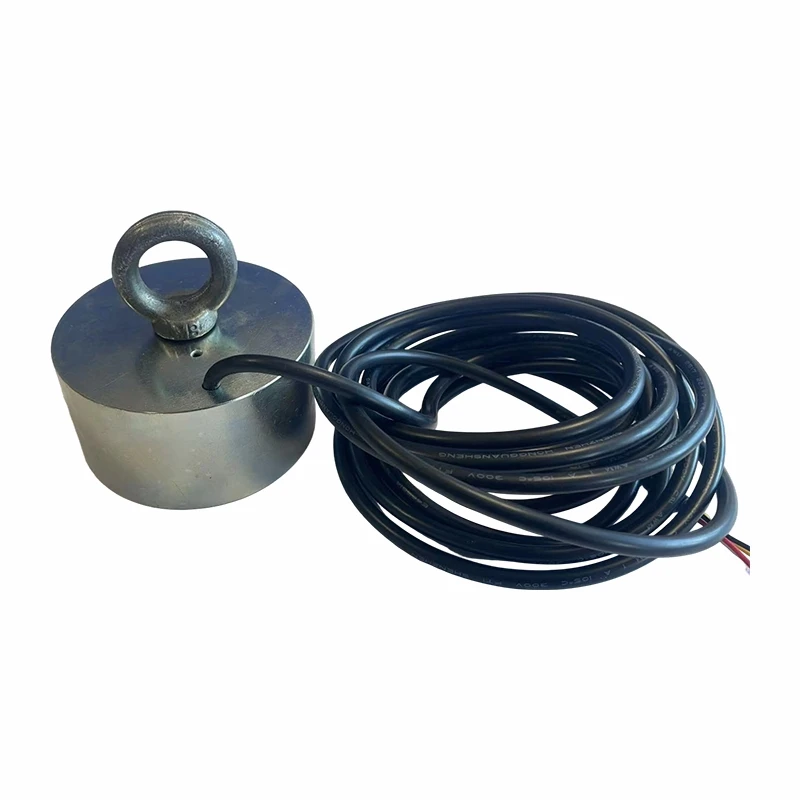

Comparing with Other Types of Electromagnets
It's also interesting to compare the performance of Push Pull Electromagnets in vacuum conditions with other types of electromagnets. For example, Motor Brake Electromagnet and Lock Actuated Electromagnet have different operating principles and design features.
Motor Brake Electromagnets are typically used to provide braking force in motors. In vacuum conditions, the lack of air can affect the heat dissipation and mechanical movement of these electromagnets, similar to Push Pull Electromagnets. However, the specific requirements and design considerations may be different, depending on the application.
Lock Actuated Electromagnets are used to provide locking or unlocking functions. In vacuum, the performance of these electromagnets may also be affected by the absence of air, but the impact may be more related to the reliability of the locking mechanism.
Another type of electromagnet is the Hoist Magnet, which is used for lifting and moving heavy objects. In vacuum, the performance of Hoist Magnets may be affected by the lack of air for heat dissipation and the change in the mechanical properties of the magnet.
Considerations for Design and Selection
When designing or selecting Push Pull Electromagnets for vacuum applications, several factors need to be considered. First, the heat dissipation requirements need to be carefully evaluated. This may involve choosing a coil with a lower resistance or incorporating a cooling system.
The mechanical design of the electromagnet also needs to be optimized for vacuum conditions. This may include using materials that can withstand the lack of air and the resulting changes in mechanical properties. Additionally, the control system for the electromagnet may need to be adjusted to account for the different movement characteristics in vacuum.
Conclusion
In conclusion, the effect of vacuum on the performance of Push Pull Electromagnets is significant and complex. The lack of air affects both the heat dissipation and the mechanical movement of the electromagnet, which can lead to reduced efficiency, increased wear and tear, and potential failure. However, with proper design and selection, Push Pull Electromagnets can still be used effectively in vacuum applications.
If you're in need of Push Pull Electromagnets for your specific application, whether it's in a vacuum environment or not, I encourage you to reach out to discuss your requirements. Our team of experts can help you select the right electromagnet and provide solutions to ensure optimal performance.
References
- "Electromagnetic Devices" by E. C. Jordan and K. G. Balmain
- "Handbook of Electromagnetic Materials" edited by D. Jiles


